Complete Guide to Dubai Future District

Complete Guide to Dubai Future District

Introduction

Positioned in the core of Dubai’s financial landscape, the Dubai Future District has been developed as a hub for innovation, entrepreneurship, and global investment. Its mission is to fast-track the growth of industries built for the future while strengthening Dubai’s status as an international center for technology and commerce. Introduced in 2020, the district unites government bodies, private enterprises, and startups under one collaborative ecosystem. Below is a detailed look at its vision, main features, and the opportunities it creates for shaping Dubai’s future economy.

What is the Dubai Future District?

The Dubai Future District (DFD) acts as an integrated ecosystem, strategically combining three major centers: the Dubai International Financial Centre (DIFC), Emirates Towers, and the Dubai World Trade Centre (DWTC). The district was officially established in January 2020 by His Highness Sheikh Mohammed Bin Rashid Al Maktoum, the Vice President and Prime Minister of the UAE and Ruler of Dubai.

The DFD is built on a hyper-connected infrastructure. It furnishes a complete set of resources, including flexible co-working areas, specialized event spaces, experimentation labs, unique regulatory tools, essential business visas and licensing, competitive housing, and a dedicated funding ecosystem.

Ultimately, the goal is to unite government entities, established businesses, and agile startups in a central location. This synergy is intended to drive rapid innovation, allow for the real-world testing of new technologies, and effectively scale up solutions that can benefit Dubai and the wider world.

To bring this vision to life, a has been launched. Its purpose is to support new and growing companies based within the district. The area’s strategy is to draw professionals, entrepreneurs, and investors globally by establishing a setting that offers compelling financial incentives and adaptable legal frameworks.

As a component of Dubai’s broader economic strategy, the district is projected to make a substantial contribution toward the emirate’s bold goal of reaching in non-oil foreign trade. To extend its influence internationally, Dubai intends to set up 50 representative offices worldwide. Each of these offices will promote the emirate as both a prime destination for investment and tourism.

These new offices will support businesses and investors while simultaneously bolstering Dubai’s international marketing campaigns. Together, these efforts underscore the critical role the Dubai Future District plays in guiding the emirate’s upcoming period of economic expansion.

Understanding the Vision of Dubai Future District

Under the guidance of His Highness Sheikh Hamdan bin Mohammed bin Rashid Al Maktoum, Crown Prince of Dubai and Chairman of the Higher Committee for Future Technology and Digital Economy, the D33 Agenda lays out Dubai’s bold aspiration: to claim a leading role in the global digital economy. The entire strategy of the Dubai Future District is built to complement this ambitious outlook.

A significant tool connecting these efforts is the Dubai Future District Fund (DFDF), strongly supported by anchor investors Dubai Future Foundation and DIFC. Its purpose is vital: to solidify Dubai’s reputation as a premier destination for innovation and starting new ventures.

The Fund has already undertaken 29 strategic investments, which provide essential support for programs like the Dubai Sandboxes and R&D activities. These specific actions help streamline regulatory processes, foster the growth of new industries, and ultimately empower the local technology workforce.

As a collaborative platform, DFDF allows both government organizations and emerging startups to run experiments and jointly develop solutions. These innovations span critical fields like AI, sustainability, fintech, transport, health, and smart infrastructure. Essentially, the Fund transforms ambitious visions into concrete results, thereby reinforcing the Dubai Future District’s central goal: to spur sustainable economic growth, speed up digital transformation, and solidify Dubai’s position as a leading hub for finance and innovation.

Essential Elements Behind Innovation

The Dubai Future District provides vital infrastructure and support services that help businesses launch, operate, and grow seamlessly. From streamlined licensing and expert legal guidance to shared workspaces and access to international markets, every feature is designed to empower innovators within a forward-thinking ecosystem.

  • Business Visas – Long-term Golden Visas allow entrepreneurs to establish their ventures, drive innovation, and secure their future in the UAE.

  • Licensing – Hassle-free business setup with customized licenses offered through Dubai Future District partners, giving startups the flexibility to expand locally and globally.

  • Affordable Accommodation – Fully furnished apartments at the Dubai World Trade Centre provide cost-effective housing options for entrepreneurs and startups.

  • Legal Support – Specialized legal sessions and free consultations covering corporate structuring, intellectual property, data privacy, and other startup needs, delivered by leading firms such as Al Tamimi & Co.

  • Banking Services – Easy access to local banking solutions through partner banks, simplifying fund management, payments, and transactions for startups.

  • DFF: AREA 2071 – A collaborative hub that offers flexible co-working spaces, opportunities for partnerships, and an inspiring environment for creative thinkers.

  • Nasdaq Dubai Growth Market – A dynamic platform tailored for SMEs and rapidly expanding companies to raise capital via IPOs, list shares, and scale globally. Businesses valued under USD 250 million can access this market.

  • DIFC Courts – Established under Dubai Law No. 12 of 2004 and DIFC Law No. 10 of 2004, these independent English-language common law courts provide fair, efficient, and transparent dispute resolution for both local and international businesses.

Top Opportunities for Startups and Entrepreneurs

Beyond being a world-class innovation hub, the Dubai Future District is purposefully designed to create an environment where startups and entrepreneurs can thrive and scale.

The district acts as a launchpad for bold ideas, offering direct access to funding opportunities, incubators, accelerators, and advanced research facilities. Here, entrepreneurs can test, refine, and expand their innovations while engaging with global markets—aligning with Dubai’s vision of becoming a leading center for technology and future-driven industries.

Key Programs and Facilities:

  • Regulation & Experimentation Lab – Through platforms like RegLab and dedicated experimental zones, startups can test emerging technologies, robotics, and autonomous systems in a real-world environment supported by flexible regulatory frameworks.

  • Future Labs – Equipped with advanced research and development facilities, these labs provide space for applied research in AI, automation, and next-generation technologies, encouraging global collaboration.

  • IDE Incubators – Recognized as the largest incubator in the MENA region, this platform offers co-working spaces, mentorship, prototyping tools, and training to help early-stage startups grow faster.

  • Business Accelerators – Programs such as Dubai Future Accelerators and DIFC FinTech Hive link entrepreneurs with key government entities and industry leaders to co-develop cutting-edge solutions.

  • University Entrepreneurship Program – A dedicated accelerator for students, enabling them to transform ideas into viable businesses while nurturing a strong innovation culture across campuses.

Impact on Dubai’s Economy and Real Estate

The Dubai Future District is more than just a physical space — it is a catalyst for reshaping the emirate’s economy and property market. Its influence extends beyond innovation, creating ripple effects across multiple sectors.

Contribution to Diversifying Dubai’s Economy Beyond Oil
Dubai has long recognized the importance of reducing reliance on oil revenues. The Future District directly supports this vision by positioning innovation, technology, and knowledge-driven industries at the heart of the city’s economy. With sectors like fintech, artificial intelligence, space technology, and blockchain gaining momentum, the district is creating sustainable, non-oil revenue streams that will secure Dubai’s long-term growth.

Boost to Commercial Real Estate Demand
As global startups, investors, and multinational companies set up operations in the district, the demand for modern commercial spaces is rising. Office towers, co-working hubs, and business centers are experiencing increased interest, fueling real estate growth. This surge not only strengthens Dubai’s property market but also attracts developers to design futuristic, tech-friendly workspaces that cater to the needs of tomorrow’s businesses.

Increased Global Recognition as a Hub for Innovation
The establishment of the Dubai Future District further cements Dubai’s position on the global stage as a leader in future-focused industries. By offering a thriving ecosystem for entrepreneurship and research, the city is competing with established innovation hubs such as Silicon Valley, Singapore, and Shenzhen. This recognition attracts top talent, international investors, and global corporations, reinforcing Dubai’s status as a destination where the world’s future economy takes shape.

Dubai Future District Growth and Development Prospects

The Dubai Future District is set to witness remarkable growth in the coming years, positioning itself as a central driver in transforming the emirate into a global hub for the “new economy.” This vision directly aligns with the ambitious Dubai Economic Agenda (D33) and the Dubai 2040 Urban Master Plan.

At its core, the district is designed to attract, develop, and scale innovation—particularly in fields such as technology and venture capital. Supporting this mission is the Dubai Future District Fund, which actively invests in forward-looking companies while cultivating a thriving start-up ecosystem.

Through tailored initiatives and strategic backing, the district is creating a fertile environment to bring in world-class talent and pioneering enterprises. This effort is expected to play a significant role in driving Dubai’s non-oil foreign trade to new heights.

A key strength lies in its strategic location, which seamlessly connects three major business hubs. Linked by a symbolic bridge, this integration forms the largest dedicated business and innovation district in the Middle East.

Anchoring this ecosystem is the Dubai Future Foundation, alongside landmark initiatives such as AREA 2071 and the Museum of the Future, all of which reinforce the district’s commitment to foresight, innovation, and future-centric design.

This blend of physical and institutional connectivity creates a collaborative platform where solutions can be co-created across rapidly expanding sectors like FinTech, HealthTech, and DeepTech.

Looking forward, the district will play a crucial role in fulfilling Dubai’s ambition of becoming the leading city of the future. It will serve as a real-world testing ground for emerging technologies, supported by progressive legislative frameworks that enable businesses to trial innovations such as drone deliveries, autonomous vehicles, and AI-driven applications in vital industries.

By fostering this innovation-driven ecosystem, the Dubai Future District is set to redefine global benchmarks for future-ready urban development and, much like the evolution of Luxury Homes in Dubai, establish itself as a model for cities worldwide.


Frequently Asked Questions (FAQs) about Dubai Future District

Q1. What is the Dubai Future District?
The Dubai Future District is the region’s first dedicated hub for the future economy. It brings together investors, startups, global corporations, and innovators to develop industries such as fintech, AI, blockchain, and space technology.

Q2. Where is the Dubai Future District located?
It is strategically located near the Dubai International Financial Centre (DIFC), Emirates Towers, and Dubai World Trade Centre, connecting Dubai’s key business and innovation zones.

Q3. What is the main purpose of the Dubai Future District?
The district aims to support Dubai’s vision of becoming the global capital of the future economy by providing infrastructure, investment platforms, and regulatory frameworks that attract entrepreneurs and international companies.

Q4. What opportunities does the Dubai Future District offer to investors and startups?
It offers access to venture capital, flexible regulations, co-working spaces, accelerators, and networking opportunities with global innovators, making it a fertile ground for startups and high-growth businesses.

Q5. How does the Dubai Future District impact real estate in Dubai?
With growing demand from tech companies and investors, the district is driving demand for commercial real estate, office spaces, and innovation-friendly infrastructure, boosting property values in surrounding areas.

Q6. Is the Dubai Future District part of Dubai’s long-term vision?
Yes. The district aligns with the UAE Centennial 2071 Plan and Dubai’s strategy to diversify its economy beyond oil, focusing on knowledge, innovation, and technology-driven industries.

Q7. How does the Dubai Future District compare to other global innovation hubs?
Unlike traditional hubs like Silicon Valley or Singapore, Dubai offers a unique mix of global connectivity, tax-friendly regulations, advanced infrastructure, and government-backed initiatives, making it highly attractive to international businesses.

Q8. Who can benefit from the Dubai Future District?
Entrepreneurs, startups, multinational companies, investors, researchers, and even professionals seeking careers in future-driven industries can benefit from the ecosystem created by the district.

Dubai Investor Visa 2025: Eligibility, Cost & Requirements

Complete Guide to Dubai Investor Visa 2025: Eligibility, Cost, and Requirements

Over the past few decades, Dubai has emerged as one of the most robust economies in the world. With its iconic skyline, innovative infrastructure, and vibrant cultural landscape, the city continues to attract global investors. For expatriates looking to make Dubai their home, understanding the immigration rules is crucial, as they are both detailed and strictly enforced. One of the most efficient ways to live and work in the Emirates is by obtaining a Dubai Investor Visa.

Dubai’s booming economy presents a wide range of opportunities for investors. With an investor visa, launching a business in the city becomes a seamless process. Beyond granting residency, this visa provides access to Dubai’s thriving business environment, opening doors to countless professional and investment opportunities.

Understanding the Dubai Investor Visa

Also known as the Dubai Partner Visa, the Investor Visa allows foreign nationals to reside in Dubai and establish or manage business operations. Eligibility typically requires an investment of AED 10 million or more in a new business, an existing company, or Dubai real estate. The visa facilitates long-term residency without the need for frequent renewals and permits investors to legally run their businesses in compliance with local regulations.

Applicants must submit essential documents, including a detailed business plan and passport, and undergo background verification checks. Given the wide range of benefits—spanning legal, financial, and residency privileges—the Dubai Investor Visa cannot be summarized in just a few lines.

Investor Visa vs Partner Visa: Key Differences Explained

The main differences between an investor visa and a partner visa are linked to how the business is managed and who holds ownership stakes.

Investor Visa

  • This visa is designed for individuals who are the sole owners of a business and are fully responsible for its operations.

  • Holders of an investor visa have complete authority over their company and can make decisions independently, without obligations to other shareholders.

  • Entrepreneurs who have independently established and registered their business typically benefit the most from a Dubai Investor Visa, enjoying full control over its operations.

Partner Visa

  • This visa is intended for business owners involved in multi-partner enterprises.

  • Commonly, this includes business structures like Limited Liability Companies (LLCs), where ownership is shared among partners or shareholders.

  • Unlike the investor visa for sole proprietors, the partner visa applies to situations where ownership and decision-making are distributed, often resembling a franchise-like setup with shared responsibilities and control.

Why Choose the Dubai Investor Visa?

For foreign investors, this visa represents a golden opportunity to leverage Dubai’s business-friendly environment and strategic geographic position. It is designed to simplify entry and operations for global entrepreneurs while supporting economic growth. It is important to note the difference between a Partner Visa and an Investor Visa, as these terms are sometimes used interchangeably.

For sole proprietors focusing on Dubai’s free zones, the Investor Visa is particularly advantageous, as it allows them to operate without partners or shareholders. The Dubai government’s 2040 Urban Master Plan further supports such investors by facilitating business setup and growth. Meanwhile, businesses with multiple owners or shareholders typically require a Partner Visa.

A key advantage of the Dubai Investor Visa is that it not only permits the applicant to reside in Dubai but also allows them to sponsor family members, making it an attractive option for investors planning long-term settlement.

Why Choose the Dubai Investor Visa?

For foreign investors, this visa represents a golden opportunity to leverage Dubai’s business-friendly environment and strategic geographic position. It is designed to simplify entry and operations for global entrepreneurs while supporting economic growth. It is important to note the difference between a Partner Visa and an Investor Visa, as these terms are sometimes used interchangeably.

For sole proprietors focusing on Dubai’s free zones, the Investor Visa is particularly advantageous, as it allows them to operate without partners or shareholders. The Dubai government’s 2040 Urban Master Plan further supports such investors by facilitating business setup and growth. Meanwhile, businesses with multiple owners or shareholders typically require a Partner Visa.

A key advantage of the Dubai Investor Visa is that it not only permits the applicant to reside in Dubai but also allows them to sponsor family members, making it an attractive option for investors planning long-term settlement.

Eligibility Criteria and Required Documents for a Dubai Investor Visa

Dubai’s thriving economy and abundant business prospects make it an attractive destination for investors worldwide, prompting many to consider relocating. To facilitate this, the UAE offers a specialized visa known as the Dubai Investor Visa or Partner Visa, which can be issued for up to 10 years, depending on the applicant’s eligibility.

This visa category is part of a recent initiative by the Dubai government aimed at foreign nationals with substantial wealth or exceptional professional expertise. Applicants must submit certain documents to qualify for this visa, including:

Passport: A valid passport is mandatory to apply for the visa. Along with the original, a copy of the passport must also be submitted to meet the visa requirements.

Proof of Investment: Investors are required to provide evidence of their investments. Acceptable documents include share certificates, real estate ownership papers (which can be obtained from authorized real estate agents in Dubai after making a property investment), or other relevant investment proofs. Demonstrating investment is essential for securing the partner visa.

In addition to these, applicants must complete the visa application form and submit it along with the following:

  • A recent photograph with a white background

  • A copy of the Dubai Trade License

Dubai Investor Visa Cost

When it comes to the Investor Visa in Dubai, the price primarily depends on the duration you choose. The 1-year visa is the most economical option, starting at around AED 3,990*, making it the most budget-friendly choice. The fees for the second year remain competitive as well.

For a 2-year residence visa, the cost varies depending on whether you include medical insurance:

  • Without medical insurance: Approximately AED 3,500*

  • With medical insurance: Approximately AED 4,200*

These competitive prices make the UAE an attractive option for individuals looking to secure residency. Let’s explore the costs for other types of residence permits in Dubai.

10-Year Residency Permit

For those considering a long-term 10-year residency, here’s a breakdown of the fees:

  • Medical examination: AED 700

  • UAE Emirates ID (10-year validity): AED 1,153

  • Confirmation of residency permit: AED 2,656.75

  • DLD (Dubai Land Department) fee: AED 4,020

  • Administrative fee: AED 1,155

Total cost: AED 9,684.75

This detailed structure helps investors and residents plan their expenses efficiently while applying for long-term residency in Dubai.
10-Year Residence Permit for Family
The total costs and associated fees are:

  • AED 5,668.50 for processing

  • AED 318.75 for the family sponsorship application

10-Year Residence Permit for Parents

  • AED 5,688.50 for a ten-year permit

Amer Centre in Dubai and Its Significance
Individuals seeking to obtain a Dubai investor visa through business ownership can visit the Amer Centre, which has branches in several key locations across the city, including:

  • Dubai Festival City

  • Al Karama

  • Ibn Battuta Mall

  • Al Jafiliya

  • Al Quoz

Types of Investor Visas and Their Advantages

Before diving into the benefits of a Dubai Investor Visa, it’s essential to understand the different types of investor visas available and the unique advantages each offers:

Partner Visa (2-Year)

The 2-Year Investor Visa provides foreign nationals the chance to live and work in the UAE without restrictions, as long as their activities comply with Dubai’s laws and regulations. This visa can be obtained through an investment ranging from AED 12,500 to AED 25,500. It allows investors to reside, work, and run their business in Dubai. Moreover, the visa is renewable by maintaining the investment, ensuring a clear path for long-term residency in the city.

5-Year Investor Visa

To qualify for a 5-Year Investor Visa, applicants must meet the following criteria:

  • Own a property with a minimum value of AED 2 million.

  • The property can be purchased using a bank loan from local banks operating under UAE regulations.

  • The property must be retained for at least two years.

This visa offers a longer-term residency option, providing stability for property-owning investors in Dubai.

10-Year Investor Visa (Golden Visa)

The prestigious 10-Year Investor Visa, also known as the Golden Visa, is designed for those making significant financial contributions to the UAE. Eligibility requires either:

  • Public investments of at least AED 2 million, or

  • Ownership of shares worth at least AED 10 million in a UAE-based company.

Applicants must hold these funds independently (without loans) and maintain them for a minimum of three years to qualify.

Tip: Investors can also obtain a Dubai Investor Visa by investing in off-plan projects. This means even if the property is under construction, it can still qualify for the visa, provided the investment meets the required criteria.

Conclusion

International investors are increasingly seeking the Dubai Investor Visa, recognizing it as a direct route into the United Arab Emirates’ thriving real estate sector. Securing this visa grants individuals the privilege of residing in Dubai while simultaneously capitalizing on its expanding property market, especially the rising demand for Luxury Homes in Dubai. Dubai’s favorable policies and significant tax advantages have cemented its status as a top destination for global property investment. This comprehensive guide is designed to help real estate investors navigate the application process effortlessly and benefit from the considerable capital growth the city provides. Essentially, the Dubai Investor Visa offers a superb opportunity for global capital to enter one of the world’s most desirable real estate landscapes.

FAQs

1. What is the difference between an investor visa and a partner visa in Dubai?
While the terms “investor visa” and “partner visa” are often used interchangeably in Dubai, it is important to distinguish between them. Despite offering identical benefits and holding the same legal status, each targets a distinct segment of the market.

In the UAE, the investor visa is generally the best fit for individuals who own a sole proprietorship. This business structure is defined as an entity that is fully owned and managed by one person. Conversely, the partner visa is better suited for individuals establishing a business partnership that involves multiple owners or shareholders.

2. Please Elaborate Dubai Investor Visa Benefits
A Dubai investor visa holder enjoys substantial advantages in the UAE, notably the lack of taxation. Neither visa holders nor local residents are required to pay income tax, and the UAE’s more than 70 double tax agreements with other nations make it a highly attractive destination for foreign investment. Additionally, the standard of available goods and services is remarkably high. A visa holder also enjoys full access to all services in Dubai, including its transportation and telecommunication networks.

3. What is the grace period for an investor visa?
Once the visa expires, the renewal or necessary final procedures must be completed within 30 days.

Complete Guide: Rules for Foreigners Buying Property in the UAE

Complete Guide: Rules for Foreigners Buying Property in the UAE

Introduction

The UAE property market is renowned for its strong regulations and transparent practices, making it one of the most investor-friendly destinations in the region. Whether you’re seeking high rental yields, lifestyle-driven investments, or long-term capital growth, the country offers abundant opportunities for both local and international buyers.

In recent years, new regulations for foreigners buying property in the UAE have significantly opened the market to overseas investors. However, before purchasing a villa, apartment, or any other type of real estate, it’s essential to understand the ownership rules and restrictions that apply to expats.

Property Buying Rules & Regulation for Foreigners in the UAE

For foreign investors and expats interested in purchasing real estate in the UAE, it’s crucial to understand that the regulations for property ownership are different for them. What restrictions do non-UAE residents face when trying to get a mortgage to buy property in the country? What is considered “freehold” property in Dubai, and what are the requirements for expatriates to buy real estate there?

Historically, expats were not permitted to own property in the UAE. Dubai was the first emirate to change this, with Abu Dhabi, Ajman, Sharjah, and Ras Al Khaimah soon following suit. Today, foreigners can own property in Dubai and other emirates, and there are several advantages for them to do so.

It’s important to remember that expats can own property in either a freehold or leasehold capacity. A closer look at the differences between freehold and leasehold ownership, as well as the specific property ownership laws for foreigners in the various emirates, will help you understand your available options.

Freehold vs Leasehold Property Ownership for Expats

Leasehold property ownership

Acquiring a leasehold property means you possess it for a specific term, which could be 99 years or less, depending on the conditions set out in the lease agreement. With this type of ownership, you are granted rights to the building itself, but not to the land it is built on.

Foreign residents are permitted to purchase freehold property in the UAE. This allows them to own both the building and the land it occupies. However, it’s important to remember that foreign nationals can only buy freehold real estate within specific, designated areas. You can find more details in our guide on the rules for freehold property ownership in Dubai.

The laws regarding property ownership for non-citizens vary between the different emirates. Below is a summary of the regulations governing real estate purchases in various emirates of the UAE.

Buying Property in Abu Dhabi: Key Rules and Ownership Options for Expats

Under Abu Dhabi’s current real estate regulations, expatriates can purchase property in the form of apartments and villas within designated investment zones. The capital offers four main legal frameworks for foreign ownership, each providing different rights and durations:

1. Musataha Agreement

A Musataha contract grants expat buyers the right to use, modify, or develop a property for a fixed period. Under this arrangement, expatriates can own residential units for up to 50 years, with the possibility of renewal for an additional 50 years by mutual agreement between all parties.

2. Ownership Deed (Usufruct for 99 Years)

Through an ownership deed, foreigners receive a 99-year usufruct right over apartments or villas. While land ownership is excluded, expat buyers have the freedom to sell, lease, or fully dispose of their purchased residential units during this period.

3. Long-Term Lease

This option allows expatriates to secure a leasehold for a minimum of 25 years. It offers stability for long-term residents or investors who prefer an extended rental-style arrangement with ownership-like benefits.

4. Usufruct Contract

A usufruct agreement provides foreigners the ability to own and occupy a property for more than 99 years. However, owners are not permitted to alter the property’s structure or facilities, ensuring the property remains as originally developed.

Abu Dhabi Real Estate Law Updates

In 2019, Abu Dhabi introduced significant amendments to its Real Estate Law, making it easier for foreigners to own property in designated investment zones. One key update states that individuals holding musataha or usufruct agreements for more than 10 years are now entitled to fully manage their properties. This includes the ability to sell, transfer, or mortgage the property without requiring the landlord’s approval. Additionally, the law prevents landlords from mortgaging the property without the consent of the musataha or usufruct holder, providing greater security to long-term investors.

Freehold Property Ownership for Expats in Abu Dhabi

The revised property regulations also grant expatriates the right to purchase freehold properties within Abu Dhabi’s investment areas. This means foreigners can own property outright, just like UAE nationals, in specific zones across the capital. Popular freehold locations in Abu Dhabi currently include Yas Island, Al Maryah Island, Saadiyat Island, Al Reem Island, Lulu Island, Sayh Al Sedairah, Al Raha Beach, Al Reef, and Masdar City, offering diverse opportunities for residential, commercial, and investment purposes.

Dubai Property Ownership Rules for Foreign Buyers

Foreign nationals are allowed to purchase property in Dubai, but only within areas officially designated as freehold zones. This gives expats and overseas investors—whether or not they reside in the UAE—the right to full freehold ownership without the limitations of leasehold agreements, usufruct rights, or 99-year restrictions.

Key points to remember:

  • Title deeds are issued by the Dubai Land Department (DLD).

  • There is no age restriction for owning property in Dubai.

  • Some of the most sought-after freehold areas include Business Bay, Downtown Dubai, Discovery Gardens, and DIFC Dubai.

Compared to other emirates, Dubai’s property purchase regulations are considered more flexible, making it a top choice for international investors.

Sharjah Property Buying Rules for Foreigners

Under the current real estate laws in Sharjah, foreign nationals are not allowed to purchase freehold properties in the emirate. However, non-UAE citizens can obtain usufruct rights—a long-term property lease—valid for up to 100 years, provided the agreement is officially registered with the Sharjah Real Estate Registration Department (SRERD).

This usufruct right is only applicable in designated areas approved by the Government of Sharjah, and buyers must secure special permission from the Ruler of Sharjah before proceeding. Expats interested in investing can explore the top residential areas in Sharjah offering apartments and villas for sale under these conditions.

For detailed guidelines and updates on property ownership regulations in the UAE, it is advisable to visit the official UAE government website.

Taxation Rules for Foreign Buyers

The UAE is globally recognized for its tax-friendly policies toward expatriates. While there is no property tax on real estate purchases within the country, foreign buyers should be mindful of tax obligations in their home countries.

For example, a U.S. citizen purchasing property in the UAE may still be liable for taxes on overseas earnings such as rental income, savings interest, dividend payments, and other taxable gains. To avoid unexpected liabilities, it’s recommended to consult a qualified tax advisor in your home country before finalizing a property purchase in Sharjah or anywhere in the UAE.

Restrictions & Important Considerations

While the UAE offers excellent opportunities for international investors, there are certain restrictions to keep in mind:

  • Limited Areas for Foreign Ownership – Not every location is open to international buyers. Foreigners can only purchase in designated freehold or leasehold zones.

  • Leasehold Limitations – Leasehold properties grant ownership rights for a specific term (often 30 to 99 years), after which ownership reverts to the original landholder. Buyers should carefully review contract terms before committing.

  • Visa Eligibility Linked to Property Purchase – Property ownership can provide eligibility for different visa categories, such as the investor visa or Golden Visa. However, visa qualification depends on the value and type of property purchased.

Benefits of Buying Property in the UAE as a Foreigner

Despite these considerations, foreign ownership in the UAE comes with significant advantages:

  • Stable Investment Environment – The UAE is known for its investor-friendly policies, political stability, and regulated real estate market.

  • High Rental Yields – Cities like Dubai consistently rank among the top global destinations for rental returns, making property a strong income-generating asset.

  • Residency Opportunities – Owning qualifying property can open the door to long-term residency options, making it attractive for those looking to establish a base in the UAE.

  • World-Class Lifestyle & Infrastructure – From luxury amenities and modern developments to globally connected transport and business hubs, the UAE offers an unmatched living experience.

Conclusion

Foreigners can confidently invest in UAE real estate, provided they understand the rules around ownership, designated areas, and visa-linked benefits. Familiarizing yourself with these regulations is the first step toward making a secure and profitable investment.

Professional guidance from licensed real estate brokers and legal advisors is highly recommended to ensure a smooth process and full compliance with UAE property laws.

Ultimately, the UAE’s openness to international investors, coupled with its strong economy and dynamic property market, makes it one of the most promising destinations for global real estate investment, especially for those exploring Luxury Homes In Dubai.

FAQs: Foreigners Buying Property in the UAE

1. Can foreigners buy property anywhere in the UAE?
No, foreigners can only purchase property in designated freehold or leasehold zones, which vary by emirate. Popular areas in Dubai include Palm Jumeirah, Downtown Dubai, and Dubai Marina. In Abu Dhabi, Saadiyat Island and Al Reem Island are common investment zones.

2. What is the difference between freehold and leasehold property in the UAE?

  • Freehold: Foreign buyers have full ownership of the property and the land it stands on.

  • Leasehold: Ownership is granted for a fixed term (typically 30–99 years), after which it reverts to the landowner.

3. Do foreigners get residency if they buy property in the UAE?
Yes, property ownership can make foreigners eligible for investor visas or the UAE Golden Visa, depending on the property’s value and type. For example, a property investment of AED 2 million or more can qualify for a 10-year Golden Visa.

4. Can foreigners get a mortgage in the UAE?
Yes, many UAE banks offer mortgages to non-residents and expatriates. However, the loan-to-value (LTV) ratio is usually lower for foreigners compared to residents, meaning buyers may need a larger down payment.

5. Are there property taxes for foreigners in the UAE?
No annual property tax is charged in the UAE. However, buyers must pay one-time fees such as the registration fee (4% in Dubai) and ongoing service charges for building maintenance.

6. Is it better to buy or rent property in the UAE as a foreigner?
It depends on your long-term goals. Buying can be more cost-effective for investors or those planning to stay long-term, especially with high rental yields. Renting may be more practical for short-term residents or those testing the market.

7. What documents are required for foreigners to buy property in the UAE?
Typically, you need a valid passport, proof of funds or mortgage pre-approval, and signed agreements with the seller or developer. Additional documents may be requested depending on the transaction type.

Dubai Real Estate Investment: Short-Term vs Long-Term – Which Is Better?

Dubai Property Investment: Which Is Better, Short-Term or Long-Term?

Introduction

Dubai has established itself as one of the world’s most dynamic real estate hubs, attracting investors from every corner of the globe. Known for its iconic skyline, world-class infrastructure, and investor-friendly policies, the city continues to offer opportunities that few markets can match. From zero property tax and a stable economy to booming tourism and consistently high rental yields, Dubai’s property sector is designed to deliver strong returns for both local and international buyers.

For investors, one of the most important decisions is choosing between short-term and long-term property investment strategies. Each approach comes with its own benefits, risks, and financial implications. This article explores both options in detail, helping you decide which strategy aligns best with your goals.

Dubai’s property market continues to be a global powerhouse. Compared to major international cities like London or New York, which see average rental returns of 2–4%, Dubai offers significantly higher average rental yields: around 7.3% for apartments and 5% for villas. This, combined with the absence of property and capital gains tax, consistently positions the city as one of the most attractive places for real estate investors.

Profitability in real estate isn’t one-size-fits-all. Some investors favor a short-term approach, seeking quick gains, while others prefer a long-term strategy focused on sustained growth. This report will analyze both investment methods, using up-to-date 2025 market data, current trends, and relevant legal information.

Understanding the difference between Short-Term and Long-Term Investments

The main difference between investing in Dubai property for the short term versus the long term is how quickly you want to see returns and how much management you’re willing to put in. The table below provides additional information to help you better understand.

Aspect
Short-Term Investment
Long-Term Investment
Time Horizon
1–3 years
5–10+ years
Main Strategies
– Flipping off-plan units (buy early, sell before or after handover) – Holiday rentals through platforms like Airbnb, Booking.com, or licensed operators
– Long-term rental contracts with families, professionals, and expats – Holding off-plan units for extended periods to benefit from property appreciation
Income Model
Quick returns via resale profits or short-stay rental income
Steady cash flow from yearly leases, combined with gradual capital growth
Investor Profile
Hands-on investors who can manage guests or navigate market timing
Patient investors looking for passive income and lower risk exposure

Short-Term Investment in Dubai

Short-term property investment in Dubai is designed for investors seeking faster returns. This approach usually involves either flipping off-plan properties or offering units as short-stay rentals. The strategy has become especially popular due to Dubai’s thriving tourism industry and the flexibility of its off-plan resale market.

2025 Returns and Market Insights

  • Gross Yields: 7–11% in high-demand tourist destinations.

  • Net Yields: Typically range from 6–9% after covering management, furnishing, and licensing costs.

  • Occupancy: Highest from November to March; yearly averages fluctuate depending on location and rental operator.

  • ADR (Average Daily Rate): Popular areas like Downtown Dubai and Dubai Marina often command AED 600+ per night during peak season, with rates decreasing during summer months.

While short-term investments can offer higher returns than traditional long-term leasing, they also involve more operational work and greater market volatility. Investors must be ready to manage guest stays, seasonal demand, and ongoing property maintenance.

Key Investment Strategies

Holiday Rentals: Areas like Downtown Dubai, Dubai Marina, Business Bay, and Palm Jumeirah remain top choices for short-term stays on platforms such as Airbnb. These neighborhoods enjoy strong tourist demand thanks to their central locations and easy access to major attractions.

Flipping Off-Plan Properties: Investors often purchase off-plan units during the launch phase, which are generally priced 10–20% lower than ready properties and come with flexible post-handover payment options. The goal is to resell before or soon after completion to capture price appreciation, though profits depend on market timing and local demand.

Key Advantages

  • Potential for higher rental returns compared to long-term leasing.

  • Market flexibility, allowing owners to sell when property prices climb.

  • Ability to personally use the property during vacant periods.

Possible Challenges

  • Seasonal income fluctuations, with occupancy typically dropping by 15–25% during summer.

  • Need for a DTCM (Dubai Tourism) holiday home license.

  • Higher upfront costs for furnishings, utilities, and marketing.

  • Continuous management required for guest check-ins, cleaning, and booking coordination.

Long-Term Property Investment in Dubai

Investing in Dubai real estate for the long term focuses on stability and gradual wealth creation. Instead of chasing quick returns, investors aim for steady rental income and capital appreciation by holding properties for five to ten years or more.

Popular Long-Term Strategies

Annual Rental Leases: Leasing properties on 12-month renewable contracts to families, working professionals, and expatriates is a proven way to generate consistent income. This model performs well in residential communities such as Jumeirah Village Circle (JVC), Al Furjan, Mirdif, and Town Square, where tenants prioritize access to schools, community facilities, and affordable housing.

Off-Plan Purchases for Future Growth: Buying properties during the launch phase—often priced 10% to 30% below ready units—and holding them until the area matures can yield significant gains. Locations like Dubai Silicon Oasis and Discovery Gardens tend to attract strong rental demand once infrastructure, amenities, and transport links are fully developed.

Key Advantages

  • Reliable, stable rental income with less seasonal fluctuation.

  • Lower tenant turnover compared to short-term or holiday rentals.

  • Better financing options, as banks generally favor stable, long-term rental structures.

  • Improved property upkeep, since family tenants usually take better care of their homes.

Challenges

  • Lower rental yields than short-term rentals.

  • Reduced flexibility when selling, as finding a buyer may take time.

  • Ongoing service charges and maintenance that affect net returns.

  • Capital appreciation depends on Dubai’s market trends and infrastructure development.

Market Trends in Dubai Real Estate

Dubai continues to outperform many global property markets with strong rental yields and enduring investment appeal. However, as the market matures, investors should carefully consider several emerging factors before making decisions.

  • Price Corrections: Industry experts, including Fitch Ratings, predict a potential 10–15% price adjustment as the market absorbs upcoming supply. For investors, this presents an opportunity to enter at more competitive price points, especially in up-and-coming communities with solid long-term growth potential.
  • Surge in New Supply: With over 210,000 residential units currently in the development pipeline, some areas may experience rental pressure. Despite this, the influx of new projects aligns with Dubai’s long-term urban development strategy, fostering fresh residential hubs and modern infrastructure that enhance the market’s overall depth and diversity.
  • Seasonal Trends in Short-Term Rentals: Holiday rentals remain closely linked to Dubai’s tourism cycle, with peak occupancy typically occurring between November and March. This allows landlords to command premium rates during high-demand periods, while longer-term leasing can provide stable income during off-peak months.
  • Service Charges in Luxury Communities: Prestigious areas such as Palm Jumeirah and Downtown Dubai come with higher maintenance and service fees. Although these charges increase operating costs, they ensure world-class amenities and facilities, attracting high-paying tenants and sustaining strong resale values over time.

Which Strategy Suits You?

Choosing between short-term and long-term property investment in Dubai largely depends on your financial goals, lifestyle preferences, and risk appetite. Both strategies can be profitable, but the right choice varies from one investor to another.

Short-Term Investment is Ideal For:

  • Investors who prioritize high cash flow and quick returns.

  • Owners targeting tourist-heavy areas such as Downtown Dubai, Palm Jumeirah, or Dubai Marina, where holiday rentals perform exceptionally well.

  • Individuals who don’t mind actively managing their property or are willing to hire professional property managers to handle bookings, maintenance, and guest services.

Long-Term Investment is Ideal For:

  • Investors seeking stability and passive income through consistent rental payments.

  • Families or expatriates who plan to attract long-term tenants, ensuring minimal vacancy rates.

  • Buyers who are focused on capital appreciation and wealth preservation over time, with less emphasis on daily or seasonal management.

Ultimately, the decision should align with your personal financial strategy. If you value flexibility and higher yields, short-term rentals may be your best fit. If stability and long-term growth are your priority, then long-term leasing provides a safer and more predictable path.

Expert Advice & Practical Tips

Making the right property investment decision in Dubai requires more than just comparing short-term and long-term strategies—it also involves smart planning and professional guidance. Here are some expert tips to help you navigate the market effectively:

Check Location Demand Before Deciding
The success of your investment depends heavily on location. Short-term rentals perform best in high-tourism areas such as Downtown Dubai, Palm Jumeirah, and Dubai Marina, while long-term rentals are in demand across residential communities like Arabian Ranches, Jumeirah Village Circle, and Dubai Hills Estate.

Work with RERA-Approved Agents and Property Managers
To safeguard your investment, always work with licensed real estate brokers and property managers approved by Dubai’s Real Estate Regulatory Authority (RERA). They can guide you through legal processes, handle tenant management, and ensure compliance with regulations.

Stay Updated with Dubai’s Real Estate Regulations
The Dubai property market is dynamic, with frequent updates to rules on rental contracts, holiday home permits, and investor rights. Staying informed ensures you avoid penalties and take advantage of new opportunities.

Diversify Investment Across Both Strategies if Possible
If your budget allows, consider diversifying across both short-term and long-term investments. This approach balances the flexibility and higher returns of short-term rentals with the stability and capital growth of long-term properties.

Conclusion

Both short-term and long-term property investments in Dubai offer unique advantages, but they cater to different investor needs. Short-term rentals provide greater flexibility and the potential for higher yields, particularly in tourist-heavy areas, while long-term investments deliver stability, consistent income, and stronger prospects for capital appreciation over time.

The key is to align your choice with your personal financial goals, lifestyle preferences, and risk tolerance. If you value quick returns and don’t mind active management, short-term rentals may suit you best. If you prefer predictable income and wealth preservation, long-term leasing offers a more reliable path.

Finally, it’s always wise to consult with experienced real estate professionals and advisors before making any investment decision, especially when exploring Luxury Homes in Dubai. Their expertise can help you evaluate the market, minimize risks, and ensure your property strategy supports your long-term financial success.

FAQs

1. Is short-term or long-term property investment more profitable in Dubai?
Both can be profitable depending on your strategy. Short-term rentals often generate higher yields, especially in tourist areas, while long-term rentals offer stable income and long-term appreciation.

2. Are short-term rentals allowed in Dubai?
Yes, short-term rentals are legal in Dubai, but owners must obtain a holiday home license from the Dubai Department of Tourism and Commerce Marketing (DTCM).

3. What are the average rental yields in Dubai?
Rental yields in Dubai typically range from 5% to 8% annually, with short-term rentals sometimes achieving even higher returns during peak tourism seasons.

4. Do property owners in Dubai pay taxes on rental income?
No, Dubai does not charge property tax or capital gains tax. However, service charges, maintenance fees, and holiday home licensing costs may apply.

5. Which areas in Dubai are best for short-term rentals?
Prime tourist locations such as Downtown Dubai, Palm Jumeirah, Dubai Marina, and Business Bay are highly popular for short-term rentals.

6. Which areas are better for long-term rentals in Dubai?
Residential communities like Arabian Ranches, Dubai Hills Estate, Jumeirah Village Circle (JVC), and Mirdif are attractive for long-term tenants such as families and expatriates.

7. Can foreigners buy property in Dubai for investment?
Yes, foreigners can buy property in designated freehold areas in Dubai, giving them full ownership rights.

8. Is property investment in Dubai considered safe?
Yes, Dubai’s property market is highly regulated by RERA (Real Estate Regulatory Authority), offering strong investor protection and transparency.

Best Ways to Increase Your Property Value in the UAE

Best Ways to Increase Your Property Value in the UAE

As a homeowner in the UAE, are you considering renovating your villa? Or perhaps you’re an investor aiming to boost the return on investment for an apartment? Grasping the details of home improvement can be incredibly beneficial. A well-planned and executed home renovation project can significantly improve both the aesthetics and the market value of your property.  

Understanding Home Improvement in the UAE

The UAE’s home improvement trends are shaped by a mix of luxury, functionality, and cultural influence. In Dubai, modern design and smart technology upgrades dominate, while in Abu Dhabi, sustainability and eco-friendly features are gaining popularity. Sharjah, on the other hand, blends practicality with affordability, often focusing on space optimization and comfort.

Climate also plays a crucial role. With high temperatures, intense sunlight, and frequent dust, design choices must be practical—energy-efficient cooling systems, durable flooring, and shaded outdoor areas are common priorities.

For homeowners and investors, strategic improvements are more than just aesthetic—they directly affect property value and rental potential. A well-renovated kitchen or an upgraded bathroom, for example, can set your property apart in a competitive market and ensure better returns.

We have compiled 10 Smart Home Improvement Tips for Dubai & UAE Properties to help you plan a perfect home makeover.

Top 10 Home Improvement Tips

Whether you’re planning to sell your property in the UAE or simply want to upgrade it for your own comfort, following a structured approach can make the process smooth and cost-effective. Here’s a step-by-step guide to help you:

Set A Budget

Before starting any home improvement work, it’s crucial to set a clear budget. Follow these steps to create a realistic plan:

  • Define your goals: Identify which areas of your home need major renovations and which ones only require minor touch-ups. Determine how much you’re willing to spend on each.

  • Research costs: Factor in all potential expenses, including materials, labor, permits, and contractor fees.

  • Plan according to your capacity: Align your budget with what you can comfortably afford while achieving your renovation goals.

  • Include a contingency: Always set aside a buffer (around 10% of the total budget) to cover unexpected issues that may arise during the renovation.

Make a Priority List for Effective Planning

Once you have your list of areas to improve, it’s important to rank them by urgency. This ensures that critical repairs are addressed first and prevents delays.

  • Structural concerns: Start with essential repairs that affect your home’s safety, like cracks in walls or foundational issues.

  • Roof maintenance: Address any damage to the roof immediately, as it protects your home from further deterioration.

  • Flooring issues: Inspect floors carefully and repair any problems to prevent long-term damage.

  • Plumbing and electrical work: Fix any plumbing leaks or electrical issues before moving on to cosmetic improvements.

  • Cosmetic upgrades: Once all urgent repairs are complete, focus on enhancements such as painting, minor renovations, or remodeling to boost aesthetics.

By following these steps, you can efficiently manage your home improvement project, whether for personal enjoyment or to maximize your property’s value when selling.

Smart Ways to Integrate Sustainable Energy Solutions

Even small upgrades during a home renovation in Dubai can make a big impact. Integrating eco-friendly energy options not only lowers electricity bills but also promotes long-term savings and environmental responsibility. For instance, installing solar panels can significantly reduce energy consumption while adding value to your property.

Smart energy-efficient choices to consider include:

  • Energy-efficient appliances – Opt for high-rated, low-consumption appliances to cut utility costs.

  • LED lighting – Replace traditional bulbs with LED lights to save power and extend lifespan.

  • Roof insulation – Proper insulation helps maintain indoor temperature and reduces cooling expenses.

  • Thermal window insulation – Keeps interiors cooler in summer and warmer in winter, lowering AC and heating usage.

Legal Requirements & Compliance

It’s essential that your home improvement project in the UAE adheres to all local legal requirements. Doing so helps you steer clear of future problems that could result in significant fines. Before you begin a home renovation in Dubai, be sure to secure the necessary permits and licenses from the appropriate authorities.

In addition, a renovation contractor can assist with completing the required legal paperwork. It’s also critical to comply with all legal regulations, such as the balcony rules in the UAE.

Compare the Best Renovation Companies

Selecting the right contractor is key to a successful home renovation. Here’s how to make an informed decision:

  • Research thoroughly – Check the company’s reputation through online reviews and client testimonials.

  • Request a portfolio – Evaluate their past projects to understand their design quality and expertise.

  • Assess experience – Choose a contractor experienced in handling varied renovation challenges.

  • Don’t base decisions on cost alone – The lowest price doesn’t always guarantee the best results.

  • Meet multiple contractors – Compare proposals, pricing, and service quality before making your final choice.

Plan Practical Milestones and a Clear Timeline

Creating a well-defined timeline is essential to finishing your renovation on schedule. Sit down with your contractor to review the entire project scope and agree on a realistic completion date. Break the renovation into smaller, manageable phases or milestones so that progress can be tracked effectively.

You can prioritize these milestones based on urgency—for example, starting with tasks like roof replacement, wall painting

Select the Right Construction Materials

Work closely with your contractor to choose materials that balance quality, cost, and style. Keep the following tips in mind when selecting materials for a Dubai home renovation:

  • Opt for high-quality materials to reduce the need for frequent repairs.

  • Choose low-maintenance options such as quartz or concrete for long-term durability.

  • Compare the costs of different materials and match them to your budget.

  • Ensure the material complements the overall aesthetics of your home.

  • For outdoor spaces like patios or decks, consider the local climate. Materials such as brick and concrete perform well in colder weather, while concrete also stands up to heavy rain and strong winds.

Tips to Increase Your Property Value

To preserve and Incease the value of your property over time, consider these renovation strategies:

  • Incorporate modern designs and stylish architecture to increase curb appeal.

  • Upgrade outdated spaces by remodeling the kitchen and bathrooms. Adding new cabinets or repainting existing ones can create a refreshed look.

  • Install energy-efficient systems, such as HVAC units, to reduce utility costs and attract buyers.

  • Reorganize or restructure rooms to create open, functional spaces.

  • Maintain outdoor areas—including driveways, patios, and decks—to leave a strong first impression on visitors and potential buyers.

Why Should You Adopt Eco-Friendly Practices in Your Investments?

Incorporating eco-friendly materials and methods into home improvement projects is one of the most effective ways to minimize environmental impact. Choose sustainable building options such as bamboo, reclaimed wood, and recycled metal, all of which have a significantly lower carbon footprint compared to traditional materials.

To create a healthier indoor environment, opt for low-VOC (volatile organic compound) paints and finishes, which help improve air quality. In a water-scarce region like the UAE, it’s equally important to adopt water-saving measures—for instance, installing low-flow fixtures and implementing rainwater harvesting systems can make a meaningful difference.

By embracing these sustainable upgrades, UAE homeowners not only support environmental conservation but also enjoy a more energy-efficient, cost-effective, and comfortable living space.

UAE Regulations for Home Improvements

Before starting any home renovation in the UAE, it’s essential to comply with local building codes and regulations to ensure safety and legality. These guidelines cover key aspects such as structural integrity, electrical and plumbing systems, fire safety standards, and environmental considerations.

For major renovations, obtaining the required building and environmental permits is mandatory. Even for smaller projects, notifying your local municipality or community management helps avoid disruptions and keeps the work officially documented. This not only ensures a smooth process but also protects homeowners from potential fines or legal issues.

Conclusion

Home improvement in the UAE is more than just enhancing interiors—it’s about creating spaces that align with lifestyle needs while boosting long-term property value. Whether you’re upgrading apartments or Luxury Homes in Dubai, energy-efficient upgrades, outdoor enhancements, and modern kitchens and bathrooms all have the potential to make your property stand out in a competitive market.

By thinking strategically, homeowners and investors can focus on upgrades that offer the highest returns and lasting appeal. Whether you’re planning a complete renovation or a few simple enhancements, every thoughtful change contributes to a better living experience and stronger property value in the UAE.

Frequently Asked Questions (FAQs)

1. What are the most valuable home improvements in the UAE?
The upgrades that offer the best return on investment include kitchen remodeling, bathroom renovations, and energy-efficient solutions such as smart thermostats and modern air-conditioning systems.

2. Do home improvements increase property value in Dubai and Abu Dhabi?
Yes. Strategic upgrades like modern kitchens, upgraded bathrooms, and smart home technology can significantly boost both resale value and rental demand in Dubai, Abu Dhabi, and other emirates.

3. How can I improve my home’s energy efficiency in the UAE?
Simple changes like switching to LED lighting, upgrading insulation, installing energy-efficient AC units, and adding solar panels can lower utility costs and improve sustainability.

4. Are outdoor improvements worth it in the UAE?
Absolutely. Outdoor spaces are highly valued in the UAE. Adding shaded seating areas, pergolas, or desert-friendly landscaping can enhance comfort and property appeal.

5. Should I hire professionals or do DIY home improvements?
For major projects like kitchens, bathrooms, or landscaping, hiring professionals ensures quality and compliance with local standards. DIY is better for small upgrades like painting, shelving, or decorative accents.

6. How much should I budget for home improvement in the UAE?
It depends on the property size and the scope of work. Small updates may cost a few thousand dirhams, while full renovations can range from AED 50,000 to AED 300,000+. It’s important to prioritize based on ROI.

7. Which home design trends are popular in the UAE right now?
Minimalist interiors, Arabic-inspired accents, neutral color palettes, smart home technology, and sustainable landscaping are among the most popular design trends in the UAE property market.

Where Are the Best Areas to Buy Villas in Ras Al Khaimah?

Where Are the Best Areas to Buy Villas in Ras Al Khaimah?

Ras Al Khaimah is quickly becoming one of the UAE’s most desirable destinations for property buyers. With its stunning beaches, world-class resorts, and relaxed lifestyle, the emirate offers a unique mix of coastal living and affordability that you won’t easily find in Dubai or Abu Dhabi. For families, retirees, and investors alike, buying a villa here means enjoying space, privacy, and community living in a rapidly growing market.

In this guide, we’ll explore the most sought-after neighbourhoods to buy villas in Ras Al Khaimah, including Al Hamra Village, Mina Al Arab, Al Marjan Island, Julphar/Julphar City, and emerging luxury coastal developments like Hayat Island. Each area has its own charm — from golf-course villas to beachfront homes — and we’ll highlight what makes them attractive, the lifestyle they offer, and their investment potential.

The real estate market in Ras Al Khaimah, a key northern emirate of the UAE, has experienced a consistent upward trend. This growth is fueled by its stunning beaches and diverse adventure tourism. The region features an array of impressive hotels and newly developed properties that offer a blend of luxury and competitive pricing. Individuals looking to purchase a villa in Ras Al Khaimah will find numerous options suitable for either a family residence or a profitable investment.

Most Sought-After Areas to Buy Villas in Ras Al Khaimah

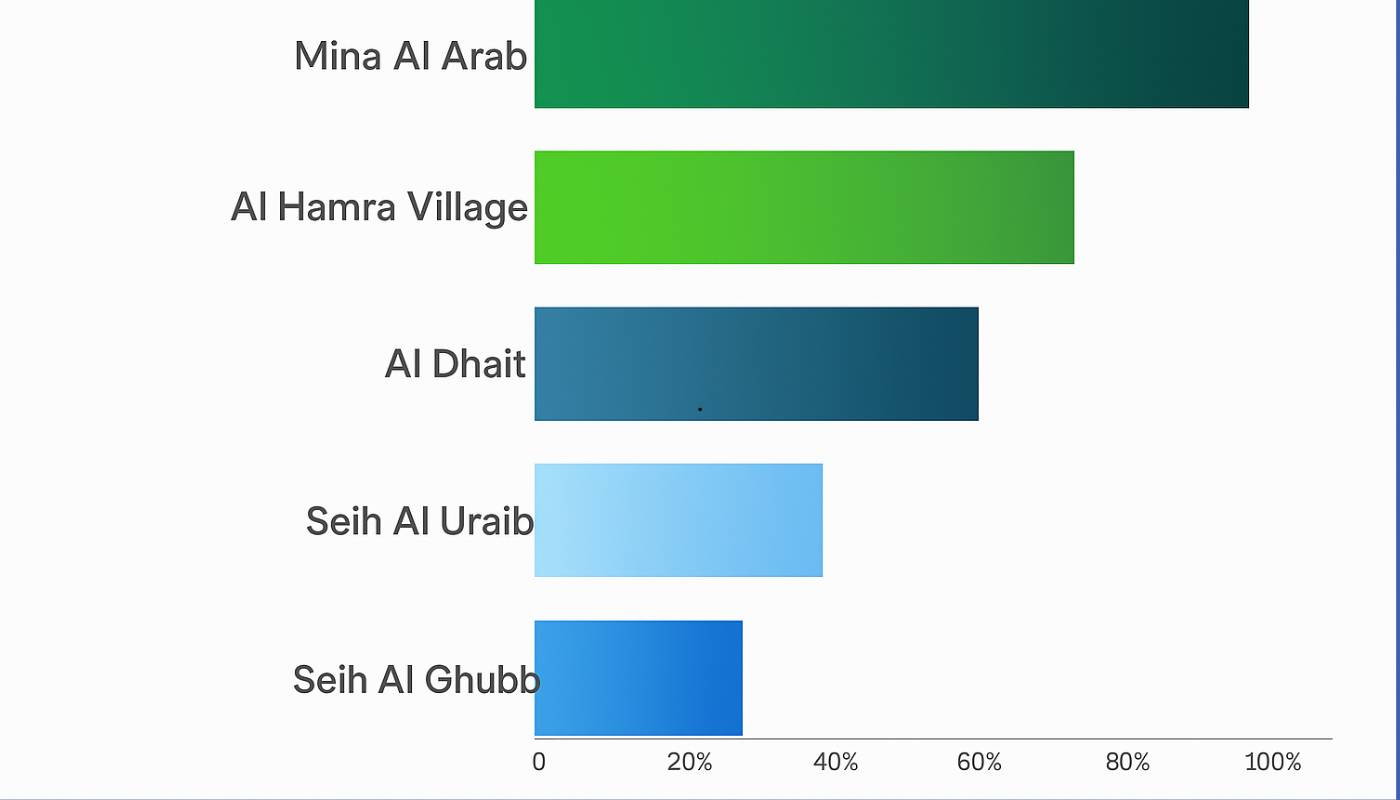
Recent data from Icon Real Estate shows that Al Hamra Village ranks as the most sought-after location for villa buyers in Ras Al Khaimah. Following closely behind are Mina Al Arab, Al Dhait, Seih Al Uraibi, and Seih Al Ghubb, all of which continue to attract strong buyer interest in the emirate’s property market.

Here is the expected ROI for these popular areas with villas for sale in Ras Al Khaimah:

Areas with Villas in RAK
ROI
Mina Al Arab
3.88%
Al Hamra Village
2.90%
Al Dhait
3.20%
Seih Al Uraibi
7.10%
Seih Al Ghubb
7.55%

Best Areas to Buy Villas in Ras Al Khaimah

Thinking about investing in a spacious, modern villa in Ras Al Khaimah? This emirate offers several prime locations where buyers can enjoy a mix of luxury living, waterfront views and family-friendly amenities. Below, we explore the most sought-after communities with villas for sale in RAK.

Mina Al Arab

Mina Al Arab ranks among the top places to purchase villas in Ras Al Khaimah. Set along the serene shoreline, this stunning waterfront destination is surrounded by unspoiled beaches and lush natural wetlands. Its vibrant marine life and scenic setting make it a favourite among residents and visitors alike.

The development is divided into several sub-communities, including Flamingo Villas, Lagoon Walk, Malibu, Granada, and Bermuda, each offering unique architectural styles and lifestyle options. Whether you choose Flamingo or Bermuda, you’ll find spacious waterfront homes close to beaches, shopping outlets and dining spots.

Villas for sale here typically range from 2 to 6 bedrooms, catering to different family sizes and budgets.

  • Average price of a 3-bedroom villa: AED 3.35M

  • Average price of a 4-bedroom villa: AED 6.80M

  • Average price of a 5-bedroom villa: AED 11M

Al Hamra Village

Overlooking the Arabian Gulf and Al Marjan Island, Al Hamra Village is another highly popular community for villa buyers. Known for its upscale lifestyle, it features key attractions such as Al Hamra Marina & Yacht Club, Al Hamra Beach, Al Hamra Golf Club, and the luxurious Waldorf Astoria Ras Al Khaimah.

Residents enjoy convenient access to supermarkets, schools, hospitals and clinics, making it ideal for families. Sub-communities include Bayti Homes, Al Hamra Village Townhouses, and Semi-Detached Duplexes, offering villas with 3 to 5 bedrooms.

Average sales prices in Al Hamra Village are:

  • 3-bedroom villas: AED 2.79M

  • 4-bedroom villas: AED 7.80M

  • 5-bedroom villas: AED 14.9M

Al Dhait

Split into Al Dhait South and Al Dhait North, this community is a favourite for buyers seeking spacious, modern villas with impressive amenities. Al Dhait South is the larger section, but both areas enjoy excellent connectivity via major roads like Sheikh Mohammed Bin Salem Road (E11), Sheikh Rashid Bin Saeed Al Maktoum Road, and Al Manama-RAK Road (E18).

Villas in Al Dhait range from 2 to 6 bedrooms, with many properties featuring private gardens, swimming pools, maid’s rooms, and even sea or lagoon views, particularly near Cove Rotana.

Average villa prices include:

  • 3-bedroom villas: AED 3.25M

  • 4-bedroom villas: AED 1.52M

  • 5-bedroom villas: AED 2.26M

Seih Al Uraibi

For buyers who value central living, Seih Al Uraibi is an excellent option. This community offers both apartments and villas, with houses typically featuring 4 to 6 bedrooms. Families benefit from proximity to top schools such as GEMS Westminster School, Ras Al Khaimah American Academy, and Alpha Private School.

For shopping and entertainment, residents can access nearby malls like RAK Mall, Manar Mall and Al Naeem Mall.

Average property prices in Seih Al Uraibi:

  • 4-bedroom villas: AED 1.17M

  • 5-bedroom villas: AED 2M

Seih Al Ghubb

If you prefer a quieter suburban lifestyle, Seih Al Ghubb offers a peaceful escape while maintaining easy connectivity via Al Ghubb Street. Villas here are available in 2 to 5-bedroom layouts, designed with spacious living areas, large kitchens, laundry facilities and dedicated parking. A typical 2-bedroom villa covers around 3,000 sq. ft., while larger homes provide extra bedrooms and expansive indoor spaces for bigger households.

With its balance of space, accessibility and comfort, Seih Al Ghubb is an appealing choice for families seeking a calm yet convenient neighbourhood.

Conclusion

From waterfront communities like Mina Al Arab to centrally located neighbourhoods such as Seih Al Uraibi, Ras Al Khaimah offers a variety of villa options to match different preferences and budgets. And while many buyers compare these choices to the appeal of Luxury Homes In Dubai, Ras Al Khaimah’s own offerings stand out with their unique charm. Whether you’re drawn to luxury golf-side living in Al Hamra Village or the tranquil atmosphere of Seih Al Ghubb, each area promises a rewarding investment opportunity in one of the UAE’s most scenic emirates.

Dubai Property Guide: How to Convert Leasehold to Freehold

Dubai Property Guide: How to Convert Leasehold to Freehold – Process, Cost & Benefits

Dubai has built a global reputation as one of the most attractive real estate destinations, offering a wide variety of investment and residential opportunities. From luxury apartments to sprawling villas, property ownership in Dubai has always been a topic of interest for both local and international buyers.

One important aspect of property ownership in the UAE is understanding the difference between leasehold and freehold properties. While leasehold properties allow ownership for a fixed period of time, freehold properties give buyers complete and permanent ownership rights.

Dubai’s real estate scene has developed into one of the most dynamic property markets globally. The Dubai Land Department (DLD) reported that in 2024, the emirate’s real estate transactions reached a value of AED 761 billion through 226,000 deals.

Activity remained strong in the first half of 2025, with official figures from the Dubai Media Office showing a transaction value of AED 431 billion and 125,538 deals. In this thriving market, many property owners are now curious about the process of converting a leasehold to a freehold property. This comprehensive guide will explain the legal foundation, eligibility, costs, and the precise steps involved, using current information.

Understanding Leasehold and Freehold in Dubai

Dubai Law No. (7) of 2006 outlines the rules for property ownership in the emirate. Nationals of the UAE and other Gulf Cooperation Council (GCC) countries are permitted to hold freehold property anywhere in Dubai. In contrast, non-UAE nationals are restricted to owning freehold property only in specific, designated zones. They may also acquire other long-term rights, such as a usufruct or a leasehold, for a duration of up to 99 years. This legal framework is what allows for the conversion of properties to freehold status when the government officially designates new areas for such ownership.

What is Leasehold?

A leasehold property means you do not own the property outright. Instead, you purchase the right to live in or use the property for a fixed period of time, usually ranging from 30 to 99 years, depending on the agreement. The land and ultimate ownership still belong to the freeholder (often the developer or the government).

Rights of a Leaseholder:

  • You can live in, rent out, or sell the property during the lease term.

  • You may benefit from facilities, amenities, and services linked to the property.

  • You can pass on the lease to heirs or sell it, but only for the remaining years on the lease.

Restrictions of a Leaseholder:

  • Ownership is time-bound — once the lease expires, the rights return to the freeholder unless extended.

  • Major modifications or changes to the property usually require the freeholder’s approval.

  • Property value may decline as the lease period shortens.

  • Fewer long-term rights compared to freehold owners.

What is Freehold?

A freehold property means you have complete ownership of both the property and the land it stands on, with no time limit attached. Once registered under your name, the property is fully yours to use, sell, lease, or pass on to your heirs without restrictions.

Benefits of Freehold Ownership:

  • Lifetime Ownership: You retain the property indefinitely, without worrying about lease expiry.

  • Freedom to Sell or Lease: You can sell, rent out, or transfer the property at any time.

  • Higher Market Value: Freehold properties generally have stronger resale demand and long-term appreciation.

  • Inheritance Rights: Ownership can be passed on to your heirs easily.

  • Flexibility in Modifications: Owners have greater control over renovations and changes, subject to local regulations.

Key Differences Between Leasehold and Freehold

While both leasehold and freehold properties allow you to own real estate in Dubai, the level of ownership and control differs significantly.

Ownership Rights

  • Leasehold: You own the property only for a fixed period (30–99 years) but not the land it is built on. Once the lease ends, ownership reverts to the freeholder unless renewed.

  • Freehold: You own both the property and the land permanently, with complete rights of use, sale, or transfer.

Control Over Property Modifications

  • Leasehold: Major renovations or structural changes usually require approval from the freeholder.

  • Freehold: Owners have full flexibility to modify, renovate, or rebuild within Dubai’s building regulations.

Resale and Inheritance Benefits

  • Leasehold: Property value may decrease as the lease term shortens, making it less attractive to buyers. Inheritance rights are also limited to the remaining lease period.

  • Freehold: Properties generally retain or increase value over time. They can be easily inherited, gifted, or sold without restrictions.

DLD’s Role

The Dubai Land Department (DLD) confirms if a property is eligible for conversion, determines its value, figures out the conversion fee, and then gives the new freehold title deed after the fees have been paid. Property owners can verify their eligibility using the Dubai REST app.

For instance, if you have a 90-year lease for a property on an eligible plot along Sheikh Zayed Road, you’re able to apply for conversion. The DLD will assess the property’s value based on its gross floor area (GFA), charge the conversion fee, and issue a new freehold title once it’s paid. Although existing leasehold property rights in Dubai are still valid, converting to freehold gives owners permanent ownership where possible.

Why More Property Owners Are Converting Leasehold to Freehold in 2025

The appetite for investment is robust. The Dubai Land Department (DLD) reported AED 761 billion in total real estate transactions for 2024 and welcomed 110,000 new investors, indicating that strong demand is carrying into 2025. This expanding base of buyers typically results in more competitive bids for freehold properties.

Additionally, Dubai’s long-term growth is supported by several key factors. According to CBRE’s 2025 market reviews, rising rents and property values are being driven by limited supply in key market sectors. The consistent growth in population and high occupancy rates in both residential and commercial areas continue to underpin strong capital values.

Community Development & Upliftment

The DLD has stated that the decision to convert properties in SZR and Al Jaddaf is expected to increase property values and draw in new developments designed to appeal to freehold investors. This is the main reason for the new conversion opportunity.

Legacy Projects Still Matter

The lasting impact of Expo 2020 and the city’s ongoing infrastructure projects have solidified Dubai’s status as a global hub, which in turn fuels the consistent demand for freehold properties. According to real estate agents and consulting firms analyzing market trends for 2024–2025, the stability of property yields and rising prices are directly linked to these fundamental factors.

Freehold ownership grants buyers complete, lifelong tenure, whereas leasehold is for a limited duration. This distinction is a key reason why many purchasers prefer freehold options when they are available.

For investors seeking indefinite ownership and an easier process for reselling their assets, freehold properties in Dubai continue to be a highly attractive option.

Who Can Apply for Leasehold to Freehold Property Conversion in Dubai?

Eligibility by Area and Nationality

The 2025 conversion initiative currently applies to two key locations: a defined section of Sheikh Zayed Road and Al Jaddaf. It is open to all nationalities who already own qualifying private property rights within the designated plots.

  • Total eligible plots: 457 in total — 128 on Sheikh Zayed Road and 329 in Al Jaddaf.

For properties located outside these two zones, eligibility for conversion will depend on whether the Ruler has officially designated the area for freehold ownership and whether the underlying property rights and developer approvals permit such a conversion.

Ownership Categories

Both individuals and eligible corporate entities can apply, provided they are the officially registered right-holders of the property and can submit all required documents.

  • For corporate owners, Dubai’s local company regulations and disclosure of beneficial owners must be satisfied before the title can be updated.

Commonly Required Documents

Applicants generally need to prepare the following:

  • Current title deed, leasehold, or usufruct agreement

  • Passport copy (and Emirates ID for UAE residents)

  • Company documents for corporate applicants

  • No-objection certificate from the mortgagee (if applicable)

  • Proof of cleared service charges

  • Application submission through the Dubai REST app or via the developer/Trustee channel as directed by the Dubai Land Department (DLD)

TME Legal notes that the process includes a 30% GFA-based conversion fee and concludes with the issuance of a final freehold title deed.

How to Convert Leasehold to Freehold: Step-by-Step Process

Dubai Land Department (DLD) offers a transparent process for converting property ownership. Here’s how investors can move from application to receiving a new freehold title deed:

  1. Check the plot or building’s eligibility through the Dubai REST platform.

  2. Submit an application for official valuation and land assessment as per DLD instructions.

  3. Fees for common areas and service charges are determined in alignment with RERA regulations.

  4. Settle the conversion amount, which equals 30% of the property’s valuation based on the Gross Floor Area (GFA).

  5. After payment, receive the updated property map and the new freehold title deed issued by DLD.

overview of these steps, helping investors smoothly transition from application to title issuance. Always use the DLD platform to confirm the latest applicable fees.

Leasehold → Freehold

Stage
Who Does What
Key Documents
DLD Fees Touchpoint
Typical Output
Eligibility check
Owner verifies plot on Dubai REST
Existing title, property details
Eligibility confirmation
Valuation request
Owner/Developer submits to DLD
Application form, title, IDs
Valuation service initiated
Valuation report
Service charge alignment
RERA framework applied
Service-charge statements
RERA-aligned computations
Cleared dues
Conversion fee payment
Owner pays via approved channels
Payment instruments
30% of valuation (GFA-based)
Payment receipt
Title issuance
DLD updates register
Originals + payment proofs
AED 250 title fee + knowledge/innovation fees
Freehold title deed

Conclusion

Converting a leasehold property to freehold in Dubai has become one of the most attractive opportunities for property owners in 2025. With the city’s real estate market continuing its strong upward trajectory and new areas being officially designated for freehold ownership, more investors are choosing to secure permanent rights over their assets. Freehold ownership not only provides lifetime security but also strengthens long-term value, resale potential, and overall investment confidence.

The Dubai Land Department (DLD) has made the conversion process transparent and straightforward by offering clear eligibility checks, standardized valuation methods, and efficient title issuance. Whether you are an investor seeking capital appreciation or a homeowner aiming for long-term stability, understanding the legal framework and step-by-step process is essential to making the right decision.

As Dubai continues to grow as a global real estate hub—driven by increasing foreign investment, population expansion, and innovative development projects—converting leasehold to freehold remains a smart and future-ready choice for any property owner. With the right guidance and timely decisions, you can unlock complete ownership, maximize long-term value, and enhance the true potential of your Luxury Home in Dubai.

FAQs on Leasehold to Freehold Conversion in Dubai

1. Can leasehold properties in Dubai be converted to freehold?
Not all leasehold properties are eligible. Conversion depends on the location, property type, and approval from the Dubai Land Department (DLD). It’s best to check eligibility with DLD or your property developer.

2. How long does it take to convert leasehold to freehold in Dubai?
The process usually takes a few weeks to a couple of months, depending on documentation, approvals, and valuation requirements.

3. What documents are required for conversion?
Generally, you need:

  • Original title deed

  • Emirates ID and passport copy

  • Proof of ownership or purchase agreement

  • Any no-objection certificates (if required by the developer)

4. How much does it cost to convert leasehold to freehold in Dubai?
The cost varies based on property value, government fees, and administrative charges. On average, expect to pay a percentage of the property’s current market value plus additional processing fees.

5. Do expatriates have the right to own freehold property in Dubai?
Yes, expatriates can own freehold property in designated freehold zones such as Dubai Marina, Downtown Dubai, Palm Jumeirah, and Business Bay.

6. Is freehold property ownership permanent in Dubai?
Yes, freehold ownership is lifetime ownership and can be sold, rented, or inherited without restrictions.

7. Which authority handles leasehold to freehold conversion in Dubai?
The Dubai Land Department (DLD) is the official body that manages property registrations, ownership transfers, and leasehold to freehold conversions.

8. Does converting to freehold increase property value?
Yes, freehold properties typically enjoy higher demand and stronger resale value, making them more attractive to investors and buyers.

Wellness Lifestyle Homes in Dubai: The Future of Luxury Living

Wellness Lifestyle Homes in Dubai: The Future of Luxury Living

In recent years, the real estate industry has seen a global shift towards wellness-focused living, with an increasing emphasis on health, sustainability, and quality of life. Homebuyers and investors are now looking for properties that support their physical and mental well-being, as well as green living practices. Modern urban developments are responding by thoughtfully blending green spaces, eco-friendly infrastructure, and health-centric amenities.

Dubai stands out as a pioneer in this movement, setting new benchmarks for luxury living with wellness-integrated communities. With its strong commitment to sustainability and innovative design, the city offers residential projects that seamlessly blend lush green surroundings, advanced technology, and health-oriented features. These developments are designed to provide residents with a lifestyle centered on relaxation, health, and environmental care, making Dubai a global leader in wellness real estate.

What Defines a Wellness-Oriented Community?

A wellness-oriented community is more than just a residential space—it’s a holistic environment that promotes physical, mental, and social well-being. These communities typically feature:

  • Expansive green areas and landscaped parks

  • State-of-the-art fitness centers and gyms

  • Curated wellness programs and recreational activities

  • Sustainable designs that reduce environmental impact

Residents enjoy upscale homes surrounded by nature, complemented by wellness-focused services that elevate their quality of life.

Dubai Real Estate Market Insights: Rising Demand for Wellness-Oriented Communities

Dubai, known globally for its luxury living and cutting-edge infrastructure, is witnessing a strong surge in demand for wellness-focused residential communities. Recent studies reveal that nearly 60% of investors and homebuyers now prefer properties that incorporate wellness features—signaling a major shift in buyer priorities. In response, leading developers across Dubai are integrating a range of health-centric amenities, including landscaped gardens, outdoor yoga decks, cycling and jogging tracks, and other lifestyle-enhancing facilities. This growing focus places Dubai among the world’s top cities embracing the wellness-living trend.

A joint survey by R.Evolution and YouGov highlights how strongly UAE residents value health and well-being in their living spaces. Key findings include:

  • 90% of residents prefer to live in a healthy, wellness-driven environment

  • Over 80% are willing to pay a premium for wellness-focused homes

  • 92% prioritize superior indoor air quality

  • 93% seek homes with advanced water purification systems

  • 90% value maximum natural light and ventilation

  • Three out of four buyers prefer properties with nature-inspired designs and greenery

  • 68% look for amenities such as spas, mindfulness zones, or wellness retreats

  • 50% are aware of the concept of “Longevity Real Estate”, which emphasizes physical and mental well-being

These insights clearly show that wellness-driven real estate is no longer a niche—it is becoming the new standard in Dubai’s property market.

Top Features of Wellness Lifestyle Communities

Dubai’s top residential developments are now designed with features that promote both physical health and mental relaxation. Below are the core components driving this trend:

Abundant Green Spaces

Research from top global universities consistently shows that access to greenery enhances life satisfaction and lowers stress levels. Communities like Dubai Hills Estate and Al Barari are at the forefront of this movement, creating expansive parks, gardens, and nature trails to support a healthier lifestyle.

Active Lifestyle Amenities

To encourage fitness and outdoor activity, leading projects now incorporate state-of-the-art fitness centers, jogging tracks, cycling paths, and swimming pools. For example, District One in Mohammed Bin Rashid City boasts an 8.4-kilometer walking and cycling track, offering residents an unmatched environment for exercise and recreation.

Wellness & Mindfulness Facilities

Many upscale communities, including Dubai Hills Estate and Serena, provide spas, wellness centers, organic cafés, yoga studios, and meditation zones. These dedicated spaces promote relaxation, mindfulness, and holistic well-being—making them ideal for health-conscious homebuyers seeking a balanced lifestyle.

Top Wellness-Oriented Communities in Dubai

As the demand for health-focused lifestyles continues to rise, Dubai’s real estate developers are creating master-planned communities designed around wellness, sustainability, and active living. Below are some of the most sought-after neighborhoods in Dubai that embrace a wellness-first philosophy:

Al Barari

Known as the Green Heart of Dubai, Al Barari is a premium eco-friendly community surrounded by lush landscapes and calming water features. Around 60% of the development is dedicated to gardens, lakes, freshwater streams, and other green spaces. The neighborhood offers sustainable villas and apartments along with organic cafés and wellness-focused venues—making it an ideal choice for residents seeking a serene, health-oriented lifestyle.

Looking to buy a home in Dubai’s top wellness destination? Connect with our experts today for the best options in Al Barari.

The Sustainable City

Developed by Diamond Developers, The Sustainable City is the UAE’s first zero-energy community. Located along Al Qudra Road, it features 500 energy-efficient villas surrounded by open green spaces. Residents enjoy a car-free environment, 4 km of cycling and jogging tracks, gyms, and wellness amenities that promote a healthy, active lifestyle.

Dubai Hills Estate

A collaboration between Emaar Properties and Meraas, Dubai Hills Estate combines luxury with wellness-focused living. Home to a world-class golf course, the community boasts vast green areas, outdoor sports facilities, and the city’s largest residential park—Dubai Hills Park. Residents can enjoy walking trails, cycling tracks, jogging paths, swimming pools, spas, leisure zones, and vibrant community clubs.

District One – Mohammed Bin Rashid City

Located within Mohammed Bin Rashid City, District One is developed by AE Real Estate Group and showcases Mediterranean and Arabian-style villas. The neighborhood prioritizes comfort, safety, and holistic wellness with amenities like cycling tracks, landscaped greenery, fitness centers, swimming pools, and an expansive man-made lagoon. Its blend of exclusivity and tranquility makes it a perfect fit for luxury property buyers in Dubai.

Serena

Developed by Dubai Properties, Serena is a family-friendly residential community strategically positioned near Al Qudra Road and Emirates Road. Offering 2-, 3-, and 4-bedroom townhouses along with detached 3-bedroom villas, Serena encourages an active lifestyle with jogging tracks, swimming pools, sports courts, and lush open spaces.

Sobha Hartland

Situated along the Dubai Water Canal, Sobha Hartland is a waterfront development featuring villas, apartments, and townhouses. Developed by Sobha Realty, the community reserves 30% of its land for green parks, walking trails, and jogging paths. Sports courts, outdoor fitness areas, yoga zones, and modern gyms make it a haven for residents seeking health and balance.

Dubai Sports City

Perfect for sports enthusiasts, Dubai Sports City offers villas, townhouses, and apartments surrounded by jogging tracks, parks, and fitness facilities. The community is home to world-class venues like the International Cricket Council, Dubai International Stadium, and The Els Club, making it the ultimate destination for an active, sports-driven lifestyle.

Emirates Hills

Often called the Beverly Hills of Dubai, Emirates Hills is one of the city’s most prestigious and greenest communities. Featuring luxurious villas and landscaped lakes, it is home to the Montgomerie Golf Club, an 18-hole championship course. This upscale neighborhood is perfect for those who seek wellness alongside unrivaled luxury.

Arabian Ranches

Developed by Emaar Properties, Arabian Ranches offers a peaceful escape surrounded by tree-lined streets, shaded pathways, and spacious parks. Residents enjoy access to cycling tracks, jogging trails, tennis courts, swimming pools, and the Dubai Polo & Equestrian Club—making it a paradise for nature lovers and fitness enthusiasts alike.

Jumeirah Golf Estates

Spread across 1,119 hectares of landscaped greenery, Jumeirah Golf Estates is home to the famous Fire and Earth golf courses. The community offers villas, apartments, and townhouses alongside abundant lakes, gardens, and wellness amenities designed to enhance both physical and mental well-being.

Live the Wellness Lifestyle in Dubai

Dubai’s wellness-focused communities are redefining luxury living by combining sustainability, fitness, and nature. Whether you’re seeking a serene retreat or an active, sports-centric environment, these neighborhoods offer the perfect balance of health and high-end living.

Top Benefits of Investing in Wellness-Oriented Communities

With demand for wellness-focused living on the rise, investing in wellness-oriented communities stands out as one of the smartest real estate opportunities in 2025. Below are the key advantages for investors:

  • Strong Capital Appreciation: Nearly 80% of buyers are willing to pay a premium for homes that prioritize health and well-being. This growing interest drives higher property values, ensuring steady capital growth over time.

  • Higher Rental Yields: Homes within wellness-centric developments consistently deliver better rental returns compared to traditional properties, allowing investors to enjoy stable and attractive passive income.

  • Future-Proof Investment: The long-term appeal of health-focused communities ensures sustained demand, making these properties a secure and forward-looking investment choice.

Conclusion

Dubai is redefining luxury living through its rapidly expanding wellness-oriented communities—perfectly aligning with the city’s vision to enhance quality of life. The surge in global demand for these developments signals unmatched growth potential in Dubai’s real estate market in the coming years. Featuring abundant green spaces, state-of-the-art fitness amenities, and a focus on both physical and mental well-being, these communities attract investors and homebuyers worldwide. For those seeking high rental yields, strong capital appreciation, and a healthier lifestyle, exploring Dubai’s top wellness projects is a strategic move.
Connect with our real estate experts today to secure the best opportunities in these thriving wellness-centric developments.

Frequently Asked Questions (FAQs)

1. What are wellness lifestyle homes in Dubai?

Wellness lifestyle homes are luxury residences designed with features that promote physical, mental, and emotional well-being. They often include air and water purification systems, smart health technology, fitness zones, meditation spaces, and eco-friendly architecture.

2. Why are wellness lifestyle homes becoming popular in Dubai?

Dubai is a global hub for innovation and luxury real estate. With increasing demand for healthier and more sustainable living, developers are introducing homes that focus on wellness. Post-pandemic, buyers and investors value health-oriented features more than ever.

3. What features can I expect in a wellness lifestyle home?

These homes may include:

  • Smart air quality monitoring and purification systems

  • Sustainable building materials and energy-efficient designs

  • Yoga decks, gyms, spas, and wellness clubs

  • Organic gardens and green community spaces

  • Smart home automation for health and comfort

4. Are wellness lifestyle homes a good investment in Dubai?

Yes. The demand for wellness-focused properties is rising globally, and Dubai is at the forefront of this trend. Wellness lifestyle homes often enjoy higher property values, stronger rental demand, and long-term appreciation potential.

5. Which developers in Dubai offer wellness lifestyle homes?

Leading developers like Emaar, DAMAC, Sobha Realty, and Ellington are incorporating wellness and sustainability features into their projects, with more communities planned around health-focused living.

6. How much does a wellness lifestyle home in Dubai cost?

Prices vary depending on the location, size, and developer. Generally, wellness lifestyle homes fall within the premium and luxury property segment, with apartments starting from AED 1 million and villas/townhouses priced higher.

7. Who should consider buying a wellness lifestyle home?

These homes are ideal for:

  • Families seeking healthier living environments

  • Professionals looking for stress-free and balanced lifestyles

  • Investors who want to capitalize on the growing demand for wellness-focused luxury real estate

10 Hidden Costs You Must Know Before Buying Property in Dubai

10 Hidden Costs You Must Know Before Buying Property in Dubai

Inroduction
Dubai has firmly established itself as a global hotspot for property investment, attracting investors, expatriates, and first-time buyers alike. With its tax-free lifestyle, futuristic projects, and iconic skyline, the city continues to rank among the most desirable destinations for real estate. But while the glamour of luxury towers and sleek brochures paints an attractive picture, the true cost of ownership often extends beyond the listed price.

Hidden expenses—often overlooked by buyers—can quickly add up, creating unexpected financial pressure and, in some cases, delaying the purchase altogether. Many new buyers only factor in the property’s market price, not realizing that legal charges, registrations, and service-related expenses can significantly increase the overall cost of investment.

To help you make informed decisions, this guide breaks down the 10 most common hidden costs of buying property in Dubai. From government fees to agent commissions and utility deposits, you’ll find everything you need to budget wisely and avoid costly surprises.

Understanding DLD Fees in Dubai Real Estate

One of the largest and most unavoidable costs is the Dubai Land Department (DLD) fee, which amounts to 4% of the property’s purchase value and must be paid upfront. This payment is essential to legally register the transaction and secure ownership rights.

For instance, if you buy a property worth AED 2 million, the DLD fee alone comes to AED 80,000. While in certain private agreements the fee may be split between buyer and seller, it’s usually the buyer’s responsibility.

In addition to the 4% fee, you should also consider smaller DLD admin charges such as:

  • Title deed issuance: AED 580

  • Knowledge and innovation fee: AED 40

Since these are mandatory, they should always be factored into your early financial planning.

Real Estate Agent Commission – The Price of Professional Guidance

In Dubai, most property buyers rely on real estate agents—especially those new to the market or unfamiliar with local laws. Agents play a vital role in simplifying the process: guiding buyers through legal requirements, helping with property comparisons, handling negotiations, and managing paperwork. However, these services come at a cost.

The standard commission rate in Dubai is 2% of the property’s purchase price, plus an additional 5% VAT. For example, purchasing a property worth AED 1.5 million would mean paying AED 30,000 in commission, along with AED 1,500 in VAT. Many buyers overlook this expense while focusing only on the property’s listed price, which often turns into an unexpected burden when finalizing closing costs.

To avoid surprises, it’s essential to discuss with your agent whether their commission is fixed, negotiable, or part of any special promotions. Some developers occasionally offer commission-free deals on off-plan projects, but such incentives are not guaranteed. In resale transactions, however, commission fees are almost always applicable, regardless of market trends. These payments are usually due upon signing the sales agreement, and failing to budget for them can delay or even risk your purchase.

For instance, if you buy a property worth AED 2 million, the DLD fee alone comes to AED 80,000. While in certain private agreements the fee may be split between buyer and seller, it’s usually the buyer’s responsibility.

In addition to the 4% fee, you should also consider smaller DLD admin charges such as:

  • Title deed issuance: AED 580

  • Knowledge and innovation fee: AED 40

Since these are mandatory, they should always be factored into your early financial planning.

Real Estate Agent Commission – The Price of Professional Guidance

In Dubai, most property buyers rely on real estate agents—especially those new to the market or unfamiliar with local laws. Agents play a vital role in simplifying the process: guiding buyers through legal requirements, helping with property comparisons, handling negotiations, and managing paperwork. However, these services come at a cost.

The standard commission rate in Dubai is 2% of the property’s purchase price, plus an additional 5% VAT. For example, purchasing a property worth AED 1.5 million would mean paying AED 30,000 in commission, along with AED 1,500 in VAT. Many buyers overlook this expense while focusing only on the property’s listed price, which often turns into an unexpected burden when finalizing closing costs.

To avoid surprises, it’s essential to discuss with your agent whether their commission is fixed, negotiable, or part of any special promotions. Some developers occasionally offer commission-free deals on off-plan projects, but such incentives are not guaranteed. In resale transactions, however, commission fees are almost always applicable, regardless of market trends. These payments are usually due upon signing the sales agreement, and failing to budget for them can delay or even risk your purchase.

Property Registration Fee – Securing Legal Ownership

After finalizing the purchase and paying the Dubai Land Department (DLD) fees, the next step is officially registering the property under your name. This process comes with a property registration fee, which varies depending on the property’s value:

  • AED 2,000 for properties valued below AED 500,000

  • AED 4,000 for properties valued above AED 500,000

This is a mandatory cost every buyer must pay, as it is required to obtain the title deed—the legal proof of property ownership. Without this step, the purchase remains incomplete, making it one of the most crucial hidden costs buyers must plan for.

Mortgage-Related Fees – The True Cost of Borrowing

Key Mortgage-Related Costs You Should Expect:

  • Mortgage Registration Fee – Charged at 0.25% of the loan amount, along with an administrative fee of AED 290.

  • Bank Processing Fee – Typically falls between 0.5% and 1% of the loan amount.

  • Valuation Fee – Banks require a professional valuation of the property to confirm its market value, usually costing between AED 2,500 and AED 3,500.

  • Life Insurance – In most cases, lenders insist on life insurance coverage linked to the mortgage. The premium amount varies depending on the borrower’s age and loan size.

These expenses may seem small individually, but together they can add up to tens of thousands of dirhams. To avoid surprises, it’s best to discuss all potential charges with your lender at the very beginning of the mortgage process.

Service Charges and Maintenance Fees – A Recurring Expense

Dubai’s premium residential communities are known for their stunning amenities—swimming pools, gyms, 24/7 security, and beautifully landscaped gardens. But these lifestyle perks come with ongoing costs. Every homeowner is required to pay annual service charges, calculated according to the property’s size, type, and the quality of services within the community.
These fees cover the upkeep of common areas, building operations, and shared facilities, ensuring that everything remains in top condition.

Service charges vary widely but usually fall between AED 10 and AED 30 per square foot per year. For example, a 1,200 sq. ft. apartment could incur yearly fees ranging from AED 18,000 to AED 36,000, depending on the location, prestige, and level of amenities provided.

These rates are monitored by the Real Estate Regulatory Agency (RERA) and are collected by the developer or building management. It’s essential to check whether the charges are fixed, subject to yearly reviews, or likely to increase over time. Many first-time buyers underestimate this recurring cost, which can create unexpected financial pressure if not planned for in advance. Factoring these charges into your long-term ownership budget is crucial to avoid surprises.

DEWA and Utility Connection Fees – Setting Up Essential Services

Before you can move in and enjoy your new home, you must activate electricity and water services through the Dubai Electricity and Water Authority (DEWA). The process includes:

  • Refundable Security Deposit: AED 2,000 for apartments and AED 4,000 for villas

  • Connection Fee: Typically AED 130 to AED 230, depending on property type

  • Monthly Consumption Bills: Ongoing charges based on usage and property size

If your property is in a gated or master-planned development, you might also have to pay for district cooling (commonly provided by Empower or Tabreed). This is billed separately and can be significant during Dubai’s hot summer months.

NOC Fees – Clearance from the Developer

When purchasing a secondary (resale) property in a freehold area, buyers must obtain a No Objection Certificate (NOC) from the developer. This certificate verifies that there are no unpaid service charges or disputes tied to the property.

NOC fees typically range from AED 500 to AED 5,000, depending on the developer and community. Processing times also differ—some developers issue it quickly, while others may take several days or weeks. Though relatively minor, this is an expense that many buyers overlook when transitioning from off-plan to secondary market purchases.

Home Insurance – Safeguarding Your Property Investment

Although home and contents insurance is not a legal requirement in Dubai, it is highly advisable—especially if you’ve purchased the property with a mortgage. In fact, most lenders insist on having a valid home insurance policy as a condition of the mortgage agreement.

Typical policy options include:

  • Building Insurance: Provides coverage for structural damage to the property. Annual premiums usually range between AED 500 and AED 2,000.

  • Contents Insurance: Protects your belongings, such as furniture, electronics, and personal items, with yearly costs typically between AED 300 and AED 1,000.

While the cost may seem relatively modest, home insurance remains one of the hidden expenses that Dubai property owners should factor into their yearly financial planning.

Furnishing & Interior Design – Turning Your Property into a Home

Dubai’s real estate market offers a wide variety of options, including fully furnished, semi-furnished, and shell-and-core properties. If your new residence isn’t ready for immediate occupancy, the cost of furnishing can become a major part of your overall budget.

  • Essential Furnishing (Studio or 1-Bedroom): Approximately AED 20,000 – AED 40,000

  • Complete Interior Setup (3-Bedroom Villa): Starting from AED 100,000 and above

  • Custom Design & Renovation: Depending on the finishes and level of customization, expenses can easily exceed AED 250,000

For premium neighborhoods such as Dubai Hills Estate, Palm Jumeirah, or Downtown Dubai, buyers often choose high-end interiors to complement the upscale surroundings—pushing costs even higher.

Bonus Tip: Watch Out for Currency Fluctuations as a Foreign Buyer

If you’re purchasing property from overseas, exchange rate movements can have a direct impact on your overall cost. Even a slight shift in the AED to GBP, EUR, or USD rates can noticeably raise or lower the total amount you pay—particularly when transferring large sums for deposits or final payments.

To reduce this potential hidden expense, consider using licensed currency exchange services and exploring hedging options that help lock in favorable rates and protect you from sudden market swings.

Conclusion

Dubai’s real estate market offers excellent opportunities for investors and homebuyers alike, but smart financial planning is the key to a smooth transaction. Whether you’re an experienced investor or purchasing your first property, identifying and preparing for the hidden costs of buying in Dubai ensures you stay within budget and gain a strong advantage in this competitive market.

Why These Countries Are the best choice for Property investment

Why These Countries Are the best choice for Property investment

Investing in international real estate can be a smart move for those seeking long-term stability, strong returns, and future capital growth. Around the world, certain countries have emerged as prime destinations for property buyers, drawing attention from both beginner and seasoned investors.

With so many choices available, narrowing down the best investment destination can feel overwhelming. To make things easier, we’ve highlighted five top global markets that stand out for real estate opportunities. Let’s explore what makes them attractive for investors.

Key Factors to Consider Before Investing Abroad

When looking into overseas property investment, it’s important to evaluate each country carefully. Here are some essential aspects every investor should review:

  • Legal Framework & Ownership Laws: Ensure the country allows foreign ownership without complicated restrictions that could create problems later.

  • Political Stability: A secure and politically stable environment helps protect your investment and ensures consistent returns.

  • Financing Opportunities: Not all investors can pay the full amount upfront, so check if mortgage or financing options are available for foreigners.

  • Market Stability: Choose countries with reliable and resilient real estate markets that are less prone to sudden crashes.

  • Taxation: Favourable taxation, such as low or zero property taxes, can significantly improve returns.

  • Residency Options: Many countries offer permanent residency or citizenship through property investments—an added advantage for global investors.

  • Rental Yields: Compare the average rental returns with other destinations to identify where your investment can deliver the highest income potential.

Top 5 Countries for Real Estate Investment

Thinking about stepping into the global property market? Now is the right time to transform that dream into reality by investing in a tangible, long-term asset. Real estate investors across the world enjoy benefits such as stable rental income, strong capital growth, and security. If you’re planning to expand your portfolio, here are five countries worth considering:

(Note: The figures provided are approximate and may vary depending on location and market conditions.)

1. United Arab Emirates

The UAE perfectly blends modern luxury with a relatively affordable lifestyle, making it one of the most attractive destinations for global property investors. Famous for its iconic skyline and safe environment, the country continues to be a hotspot for expatriates and international buyers.

Compared to major global cities like London or New York, property prices in the UAE are more competitive. On top of that, investors benefit from impressive rental yields ranging between 5% and 9%. Another major advantage is the tax-free environment—no capital gains tax and no tax on rental income.

Investors purchasing property worth AED 2 million or more are also eligible for the UAE Golden Visa, offering long-term residency benefits.

For buyers, there’s a wide range of options—from luxury waterfront properties in Dubai Marina and Palm Jumeirah to high-ROI investment areas in Abu Dhabi such as Yas Island and Saadiyat Island.

Key Reasons to Invest

  • Attractive property prices compared to other global hubs

  • Strong rental returns (5%–9%)

  • No capital gains tax or rental income tax

  • Eligibility for a Golden Visa with AED 2M investment

  • 100% property ownership rights for expats

Popular Investment Cities

  • Dubai

  • Abu Dhabi

  • Sharjah

Market Snapshot

  • Rental Yield: 5% – 9%

  • Average Rent (1-Bedroom in Dubai): USD 2,266.51

  • Price per Sq. Metre (Dubai Apartments): USD 6,592.76

https://iconre.co/

SUNSET BAY 2 BY IMTIAZ DEVELOPMENTS

DUBAI ISLANDS
  • Sunset Bay 2 at Dubai Islands is the latest addition to Imtiaz Developments' luxury residential series, offering exclusive 1 and 2-bedroom waterfront apartments and spacious 3-bedroom duplexes.

  • AED 1,800,000
https://iconre.co/

SHORELINE BY DAMAC PROPERTIES

AL MARJAN ISLAND,RAK
  • DAMAC Shoreline in Al Marjan Island in Ras Al Khaimah will redefine luxury living with its stunning architecture, premium amenities, and idyllic location.

  • AED 1,830,000

2. Turkey

Turkey – a country known for its breathtaking beaches, rich history, and laid-back lifestyle – has become one of the most attractive destinations for real estate investors. It combines a relatively low cost of living with a high quality of life, making it a strong option for both living and investing.

The property market in Turkey offers variety — from modern city apartments to luxurious seaside villas. Compared to many neighboring countries, property prices are significantly lower, which adds to its appeal.

One of the biggest advantages? Purchasing property worth USD 400,000 or more allows investors to apply for Turkish citizenship through investment. On top of that, the rental market is thriving, with yields reaching up to 7.41% in major cities.

Why Invest in Turkey?

  • Affordable lifestyle with excellent quality of living

  • Lower property prices compared to nearby countries

  • Citizenship by investment for properties above USD 400,000

  • Attractive rental returns

Top Investment Cities

  • Istanbul

  • Antalya

  • Bursa

Key Real Estate Insights

  • Rental Yield: ~7.41%

  • Average Rent (1-Bedroom Apartment): USD 949.63

  • Cost per sq. m (Apartment in Istanbul): USD 3,279.87

3. Panama

Situated at the crossroads of North and South America, Panama has quickly become one of the top real estate hotspots. Over the past few years, the country has experienced a sharp increase in property transactions — driven largely by its digital nomad visa and affordable cost of living.

With a rental yield of around 6.42%, steady market growth, and strong demand, Panama offers great opportunities for both local and foreign investors. Expats also benefit from full property ownership rights and favorable tax policies, making investment even more rewarding.

Why Invest in Panama?

  • Strategic location linking North and South America

  • Strong and growing economy

  • Affordable cost of living

  • Stable real estate market

  • Tax incentives and ownership rights for foreigners

Top Investment Cities

  • Panama City

  • David

Key Real Estate Insights

  • Rental Yield: ~6.42%

  • Average Rent (1-Bedroom Apartment): USD 886.43

  • Cost per sq. m (Apartment): USD 2,240.35

5. United States of America

The USA remains one of the strongest and most reliable real estate markets in the world. With a wide variety of property options, a stable economy, and consistently high rental demand, it continues to attract both new and experienced investors.

Although property prices are relatively higher compared to other countries, opportunities exist for every budget segment. The U.S. also offers an impressive average rental yield of 6.10%, making it an appealing choice for long-term investment and capital appreciation.

Why Invest in the USA?

  • Highly diverse real estate market

  • Strong and consistent rental demand

  • Transparent and stable legal framework

  • Reliable capital growth and appreciation

Top Investment States:

  • Florida

  • California

  • Texas

Rental Yield: ~6.10%
Average Rent (1-Bedroom Apartment): USD 3,926.65
Cost per Sq. Metre (Apartment in New York): USD 17,953.77

Conclusion

Best Real Estate Investment Destinations Worldwide – A Complete Summary

Destination
Unique Selling Point
ROI
Per Square Metre Cost of an Apartment in the City Centre
UAE
Tax-free environment.
5% to 9%
USD 6,592.76
Turkey
Citizenship through investment.
7.42%
USD 3,279.87
Panama
A highly stable market.
6.42%
USD 2,240.35
Spain
Permanent residency and long-term growth.
5.93%
USD 6,882.54
USA
Diverse market and high rental demand.
6.10%
USD 17,953.77

FAQs

1. Which country is best for real estate investment in 2025?
The top countries for real estate investment in 2025 are the UAE, Turkey, Panama, Spain, and the USA. These destinations offer strong rental yields, stable markets, and added benefits like residency or tax-free ownership.

2. Why is the UAE considered a top destination for property buyers?
The UAE attracts global investors due to tax-free rental income, high rental yields (5–9%), Golden Visa eligibility on AED 2M investment, and 100% foreign ownership rights. Dubai and Abu Dhabi remain prime hotspots.

3. Can foreigners buy property in Turkey?
Yes, foreigners can buy property in Turkey with full ownership rights. An added advantage is that investing USD 400,000 or more makes investors eligible for Turkish citizenship.

4. Is Panama a good option for affordable real estate investment?
Absolutely. Panama offers affordable property prices, full ownership rights for foreigners, and attractive rental yields of around 6.42%. Its growing expat community and stable market make it an emerging hotspot.

5. What are the benefits of investing in real estate in the USA?
The USA provides a highly diverse property market, consistent rental demand, and strong long-term capital appreciation. Although prices are higher, average yields of ~6.10% make it reliable for investors.

6. How can property investment help in gaining residency or citizenship?
Several countries like Turkey (citizenship at USD 400K) and the UAE (Golden Visa at AED 2M) offer residency or citizenship programs through property investment, making it a strategic financial and lifestyle move.

7. Which country offers the highest rental yield among the top 5?
Among the listed destinations, Turkey offers one of the highest rental yields at around 7.42%, followed by Panama at 6.42% and the USA at 6.10%.

8. What factors should I consider before investing in overseas real estate?
Key factors include foreign ownership laws, political stability, financing options, taxation, market resilience, residency benefits, and average rental yields in the chosen country.

9. Is Spain still a good country for property investment?
Yes, Spain remains attractive due to its vibrant tourism sector, stable market, and ROI of ~5.93%. Investors who purchase above USD 541K can also apply for permanent residency.

10. Which is better: investing in developed markets like the USA or emerging ones like Panama?
It depends on your investment goals. Developed markets like the USA offer stability and long-term appreciation, while emerging markets like Panama provide affordability and higher growth potential in the short term.